Why Do We Close Our Eyes When We Kiss?
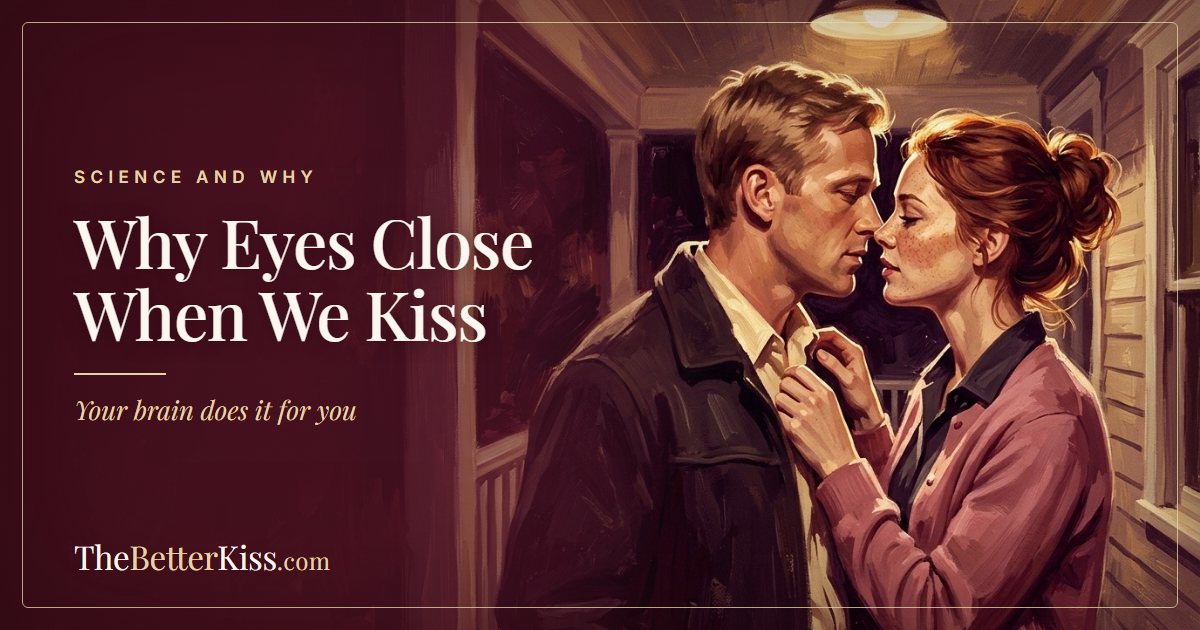
Nobody teaches it, and almost everybody does it. Close to 100% of people close their eyes during a kiss without ever deciding to — and the reason turns out to be less about romance and more about the architecture of attention — a close cousin of why kissing feels good at all.
The bandwidth explanation
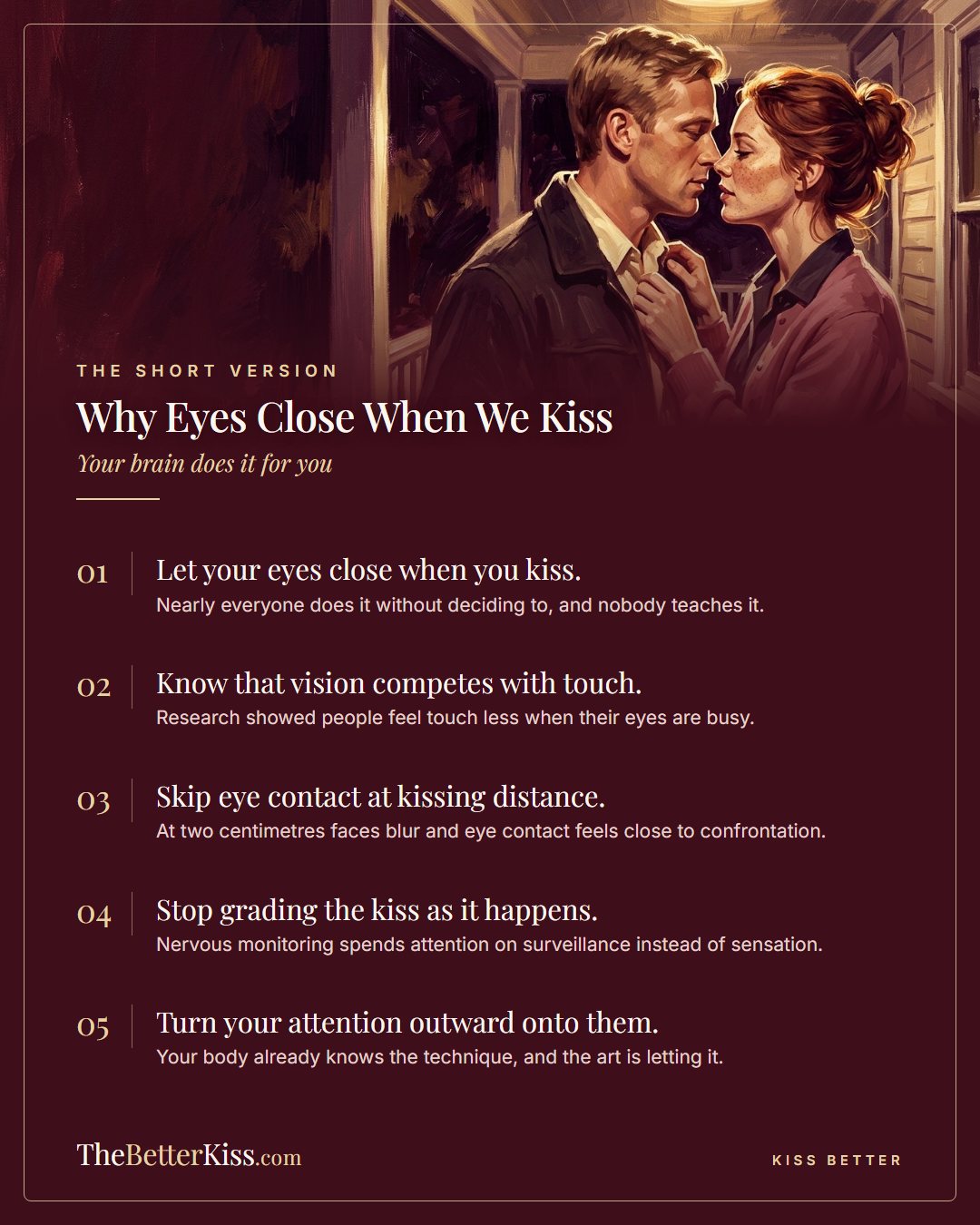
Psychologists studying attention have found that the brain struggles to fully process tactile sensation while handling a demanding visual task — vision is expensive, and it competes for the same attentional budget as touch. Research on tactile awareness (notably by Murphy and Dalton, 2016) showed that people literally feel touch less when their eyes are busy.
A kiss is a touch you very much want to feel. So the brain does the efficient thing: it shuts the most expensive sense down. Your eyes close because your attention is being spent, deliberately, on the sensation — on lips, warmth, breath, closeness. Closed eyes are your nervous system going all-in.
The intimacy explanation rides along
There's a social layer too. Eye contact at a distance of two centimetres is intense to the point of confrontation — faces blur, gazes can't focus, and the evaluative part of watching becomes impossible to sustain. Closing your eyes removes the last channel of self-consciousness. It's the body's way of saying: no more monitoring, only experiencing.
Which is why it's advice, too
Here's the useful part hiding in the science. The thing your brain does automatically — spending attention on sensation instead of surveillance — is exactly the thing anxious kissers struggle to do. Nervousness keeps one eye open, figuratively: monitoring, grading, running commentary from the ceiling. The whole skill of kissing well, and of enjoying being kissed, is letting attention go where your closed eyes are already pointing it: outward, onto them, onto what's actually happening.
Your body already knows the technique. The art is letting it — which is precisely what anxiety interferes with, and precisely what good kissing trains.
If the nerves are the real problem
Knowing how isn't the same as being able to in the moment. The first module of our guided course is free: no card, no account, about ten minutes.
Start module one, free