The History of the Kiss: 4,500 Years, Give or Take
The kiss feels eternal and universal. The historical record says: ancient, yes — universal, no. Both halves of that answer are better than the myth — as is the truth about kissing and the “love hormone”.
The oldest kiss on record
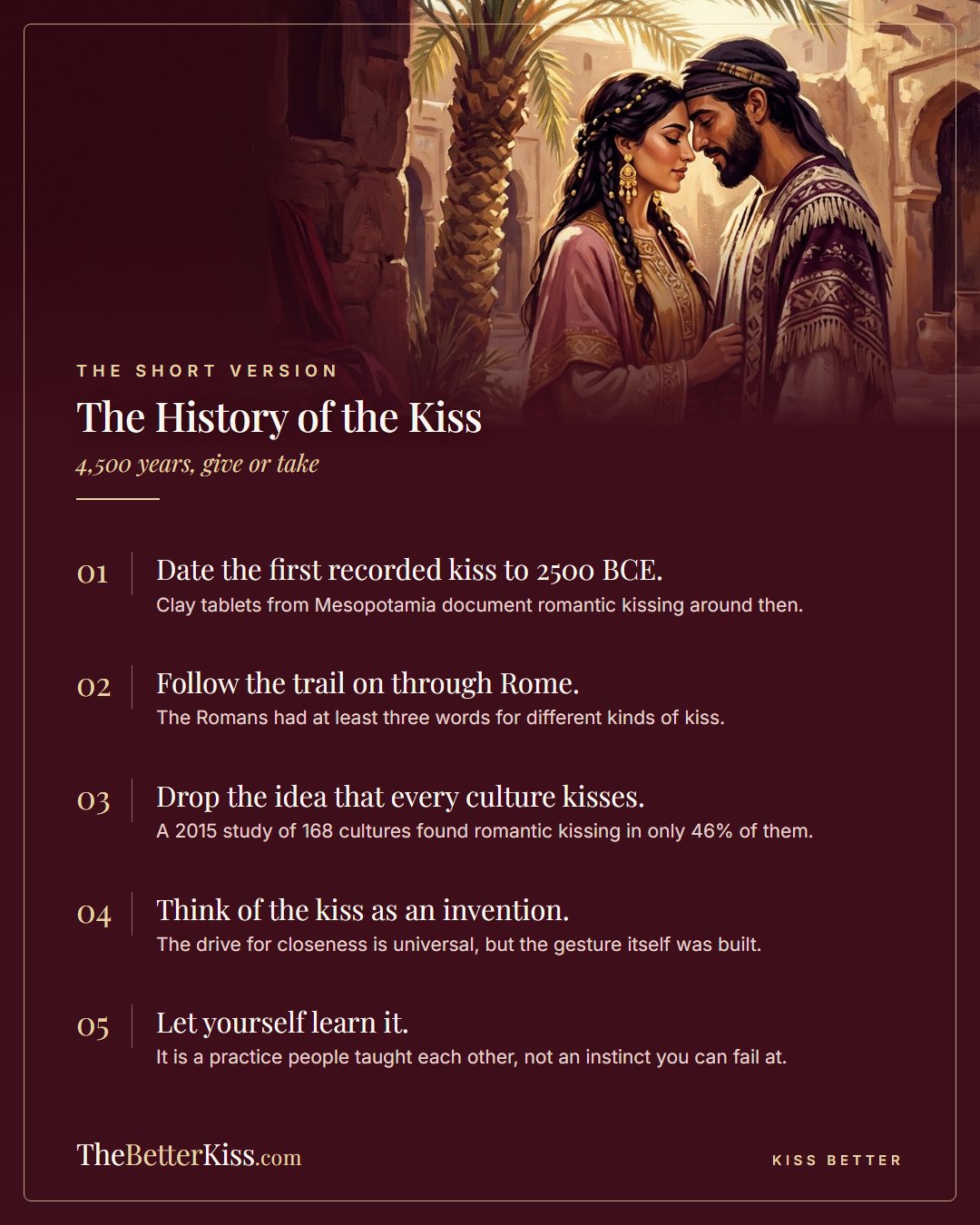
From there the trail runs through Sanskrit texts, Greek and Roman literature (the Romans had at least three words for different kisses — the friendly osculum, the affectionate basium, the passionate savium), medieval kisses of fealty and peace, and on to the doorstep kiss of the modern date.
The finding that ruins the myth
You'll read everywhere that “90% of cultures kiss.” The best modern evidence disagrees: a 2015 study led by anthropologist William Jankowiak examined 168 cultures and found romantic-sexual kissing present in only 46% of them. Many societies historically found mouth-to-mouth kissing unappealing or simply never developed it — while having rich affectionate repertoires of their own.
What that actually means
The romantic kiss is best understood as a cultural technology layered on universal raw materials: the human drive for closeness, face-to-face attention, and touch. The raw materials are everywhere; the specific gesture is an invention — one so effective it spread across most of the connected world. Which is oddly liberating: the kiss isn't an instinct you can fail at. It's a practice humans built, refined, and taught each other for four and a half thousand years. You're allowed to learn it too — starting here. And some of what humans built along the way was pure ceremony: the scheduled kisses of mistletoe, midnight and the altar.
If the nerves are the real problem
Knowing how isn't the same as being able to in the moment. The first module of our guided course is free: no card, no account, about ten minutes.
Start module one, free