Kiss and Make Up: The Kiss After an Argument
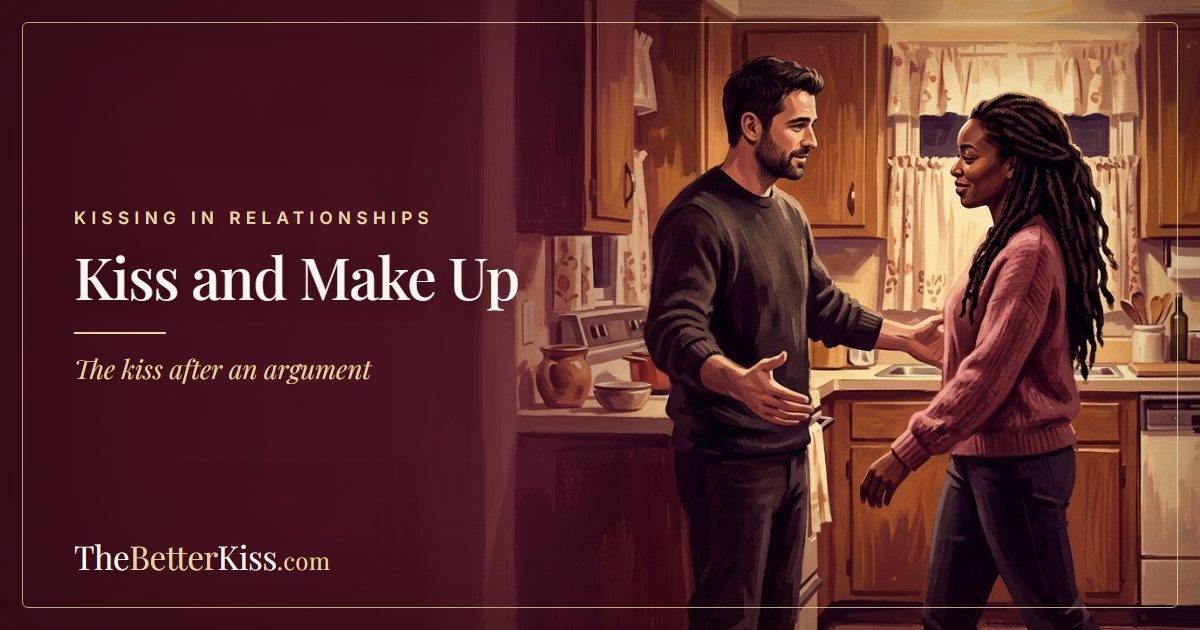
“Kiss and make up” is such an old phrase that we forget it describes a real and slightly delicate thing: the first kiss after a fight. Done at the right moment it's one of the most reassuring kisses there is. Done at the wrong one it starts the argument again.
On this page
What the make-up kiss is for
It says: we're all right. Not “you were right,” not “I've forgotten it,” just: the two of us are still intact. After an argument most people aren't waiting for a winner. They're waiting for a sign that the relationship came through, and a kiss says that faster than words do.
The order matters
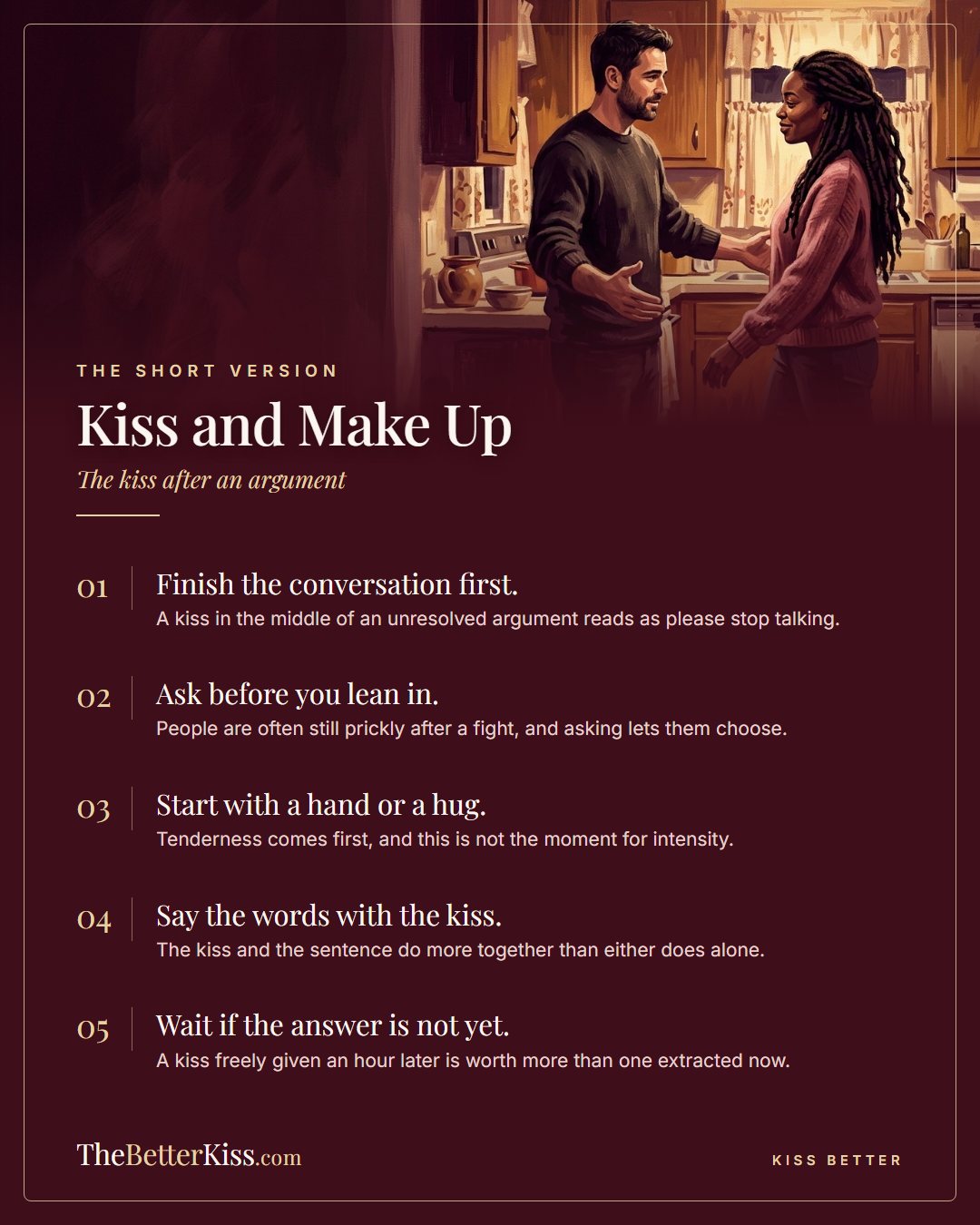
Finish the conversation first. A kiss offered in the middle of an unresolved argument reads as please stop talking, and the other person will feel dismissed, usually correctly. The make-up kiss is the full stop at the end of the sentence. It isn't a way of ending the sentence early.
You don't have to have agreed. You do have to have listened, said what you needed to say, and reached the point where you both want to stop.
Why touch helps at all
That's the honest scope of it. Affection after conflict calms both of you down and tells you the bond is fine. It doesn't solve the thing you were arguing about, and if the same fight keeps coming back, kissing won't fix that; talking will.
How to offer it
Ask. After a fight, people are often still prickly. “Can I kiss you?” or simply opening your arms lets them choose.
Start small. A hand, a hug, a kiss on the forehead. Tenderness first. This is not the moment for intensity.
Then a proper kiss. Soft, unhurried, a few seconds long. Stay close afterwards.
Say the thing. “I'm sorry,” “I love you,” “we're okay.” The kiss and the sentence do more together than either does alone.
If they're not ready
Some people need to be held as soon as a fight ends. Others need an hour before they can stand being touched. Neither is a verdict on the relationship. If the answer is “not yet,” say “okay, I'm here,” and mean it. The kiss that comes an hour later, freely given, is worth more than one extracted on the spot.
What it shouldn't be
A way to avoid apologising. A way to skip the conversation every time. A reward handed out by whoever “won.” If kissing has become how one of you shuts arguments down, that's worth saying out loud, kindly, on a calm day. For the everyday version of staying close, the long-relationship tips are here.
If the nerves are the real problem
Knowing how isn't the same as being able to in the moment. The first module of our guided course is free: no card, no account, about ten minutes.
Start module one, free